

Inside the Most Powerful Court in the World
By the Jynx Productions Team · 6 min read
I write here when something is worth thinking through. New pieces from Focus and the Jynx Journal go directly to subscribers.
There is a line that Kate Shaw uses to describe the United States Supreme Court that has stayed with us since we filmed her in Washington DC late last year. "In its best form," she told us, "it protects fundamental rights, strengthens democracy, and creates a framework in which people can decide how to live together. It can be a genuine force for good."
Kate knows this institution more intimately than almost anyone outside it. Straight out of law school, she became one of 36 law clerks, the select group of young lawyers who work directly for the justices, spending a year alongside the then 86-year-old Justice John Paul Stevens. She read every brief, sat beside him on argument days, and being asked, at 27 years old, how she interpreted the First and Eighth Amendments. She also, as it turned out, committed herself to attending every single step aerobics class run by Justice Sandra Day O'Connor and her friends. That particular obligation was not in the job description.
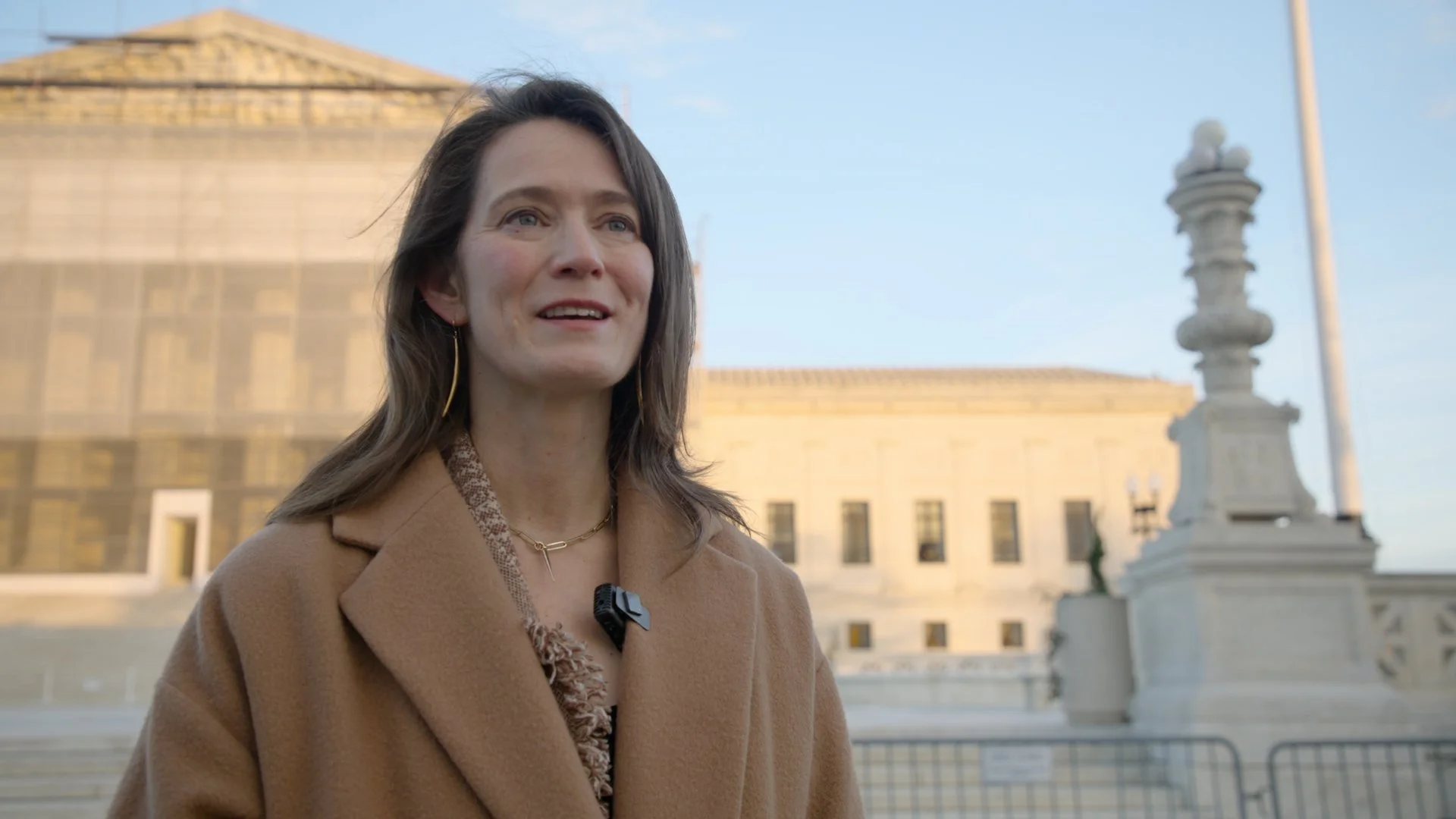
We filmed Kate, along with veteran court journalist Pema Levy and elite litigator Roman Martinez, a man who has argued before the Supreme Court 15 times and has a collection of quill pens to prove it, for our Galileo documentary Inside Supreme Court, which aired on ProSieben earlier this year. And the experience of making that film taught us something we've been thinking about ever since: the hardest part of explaining America's most powerful institution to a German audience wasn't the law. It was the access.
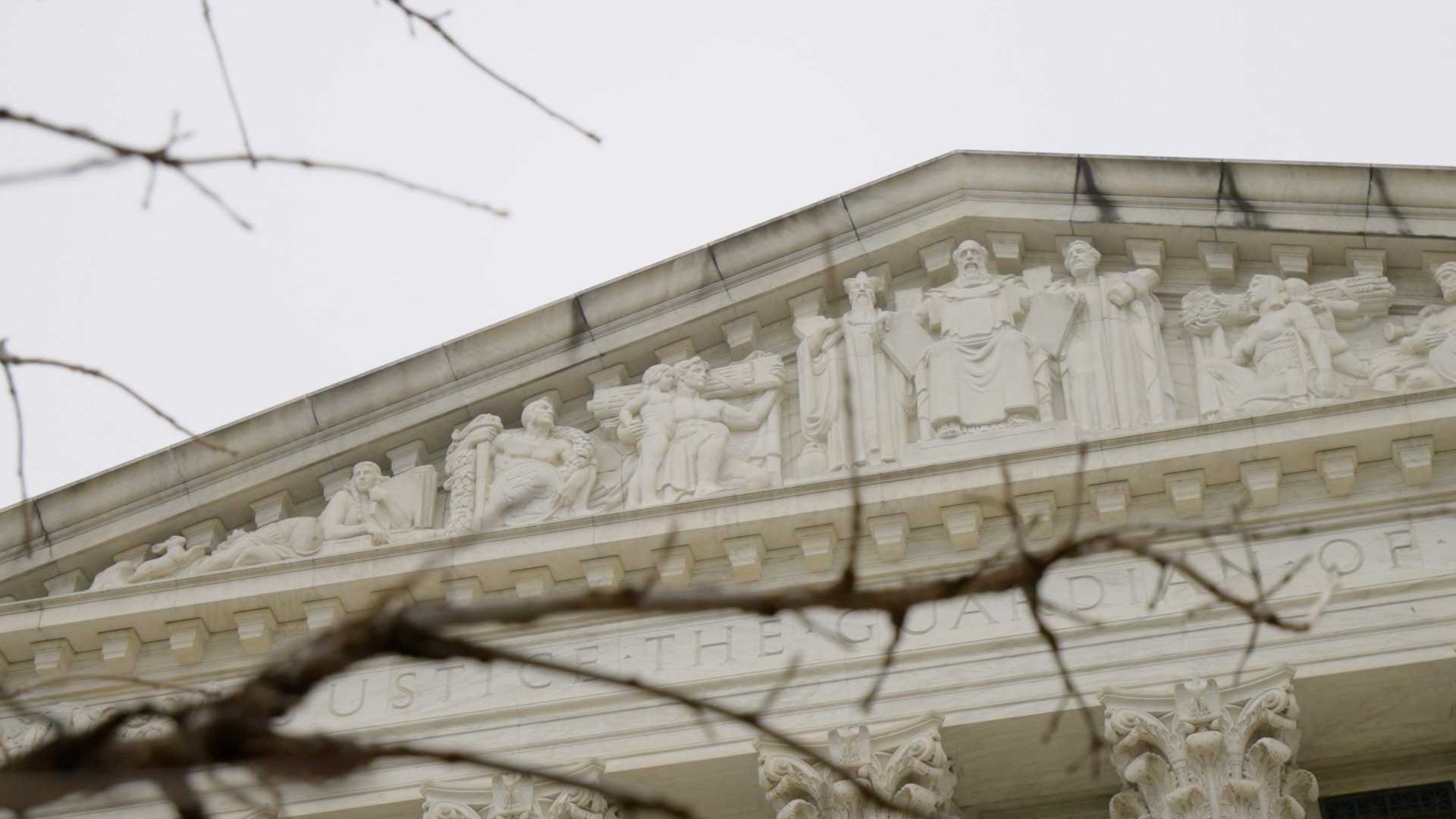
Documentary filmmaking lives or dies on the quality of the people you put in front of the camera. This is especially true when your subject is an institution as closed and deliberately opaque as the Supreme Court. Cameras are not permitted in the courtroom during arguments. The justices give almost no interviews. The deliberations happen entirely behind closed doors. The court's internal culture, the relationships between justices, the dynamics of clerks and chambers, the texture of daily life in that 90yo marble building, is almost entirely invisible to the outside world. Which means the story only exists through the people who have been inside it.
Finding those people, and convincing them to speak on camera with the kind of candor that makes documentary work, is the real production challenge. A press release or a Wikipedia entry can tell you that the Supreme Court was established in 1789 and has nine justices. What it cannot tell you is what it actually feels like to stand in the building every day for a year and still never quite get used to it. Or what it's like to prepare for months for an hour of oral argument in front of the nine most powerful judges in the world. Or what happens to the court's institutional character when judicial appointments become purely partisan calculations. Those stories only come from people with genuine proximity to the institution, and genuine proximity takes years to build.
For Inside Supreme Court, we needed subjects who could open up different dimensions of the same institution. Not three people saying variations of the same thing, but three people whose distinct relationships to the court would give a German audience a genuinely three-dimensional understanding.
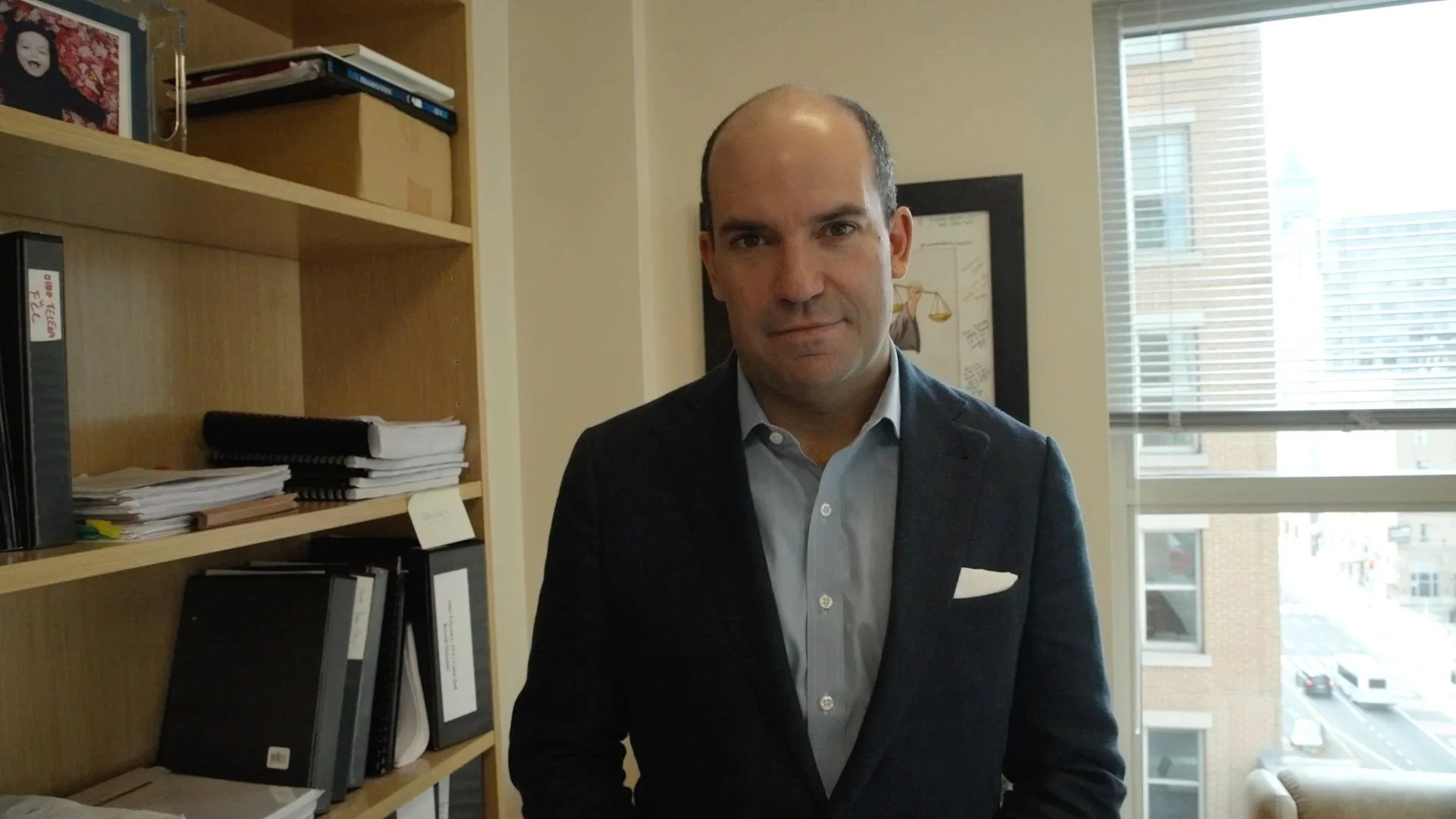
Roman Martinez gave us the practitioner's view. As an elite appellate litigator in Washington DC, Roman has spent more time arguing before the Supreme Court than almost any lawyer of his generation. Fifteen cases. Fifteen collections of the ceremonial quill pens the court presents to every arguing attorney. His preparation for a single argument runs to months, a fifty-page brief, intensive moot court sessions, the strategic calculus of identifying which five justices he needs to win and how to reach each of them.
Watching Roman the morning after an argument, "a lot of good questions from the justices, we'll see," was one of those moments that reminds you why documentary beats any other form of journalism. The understatement of a man who has just spent an hour in the arena, surrounded by the weight of what the court might decide, trying to read nine faces for signals that almost never come. You can't script that.
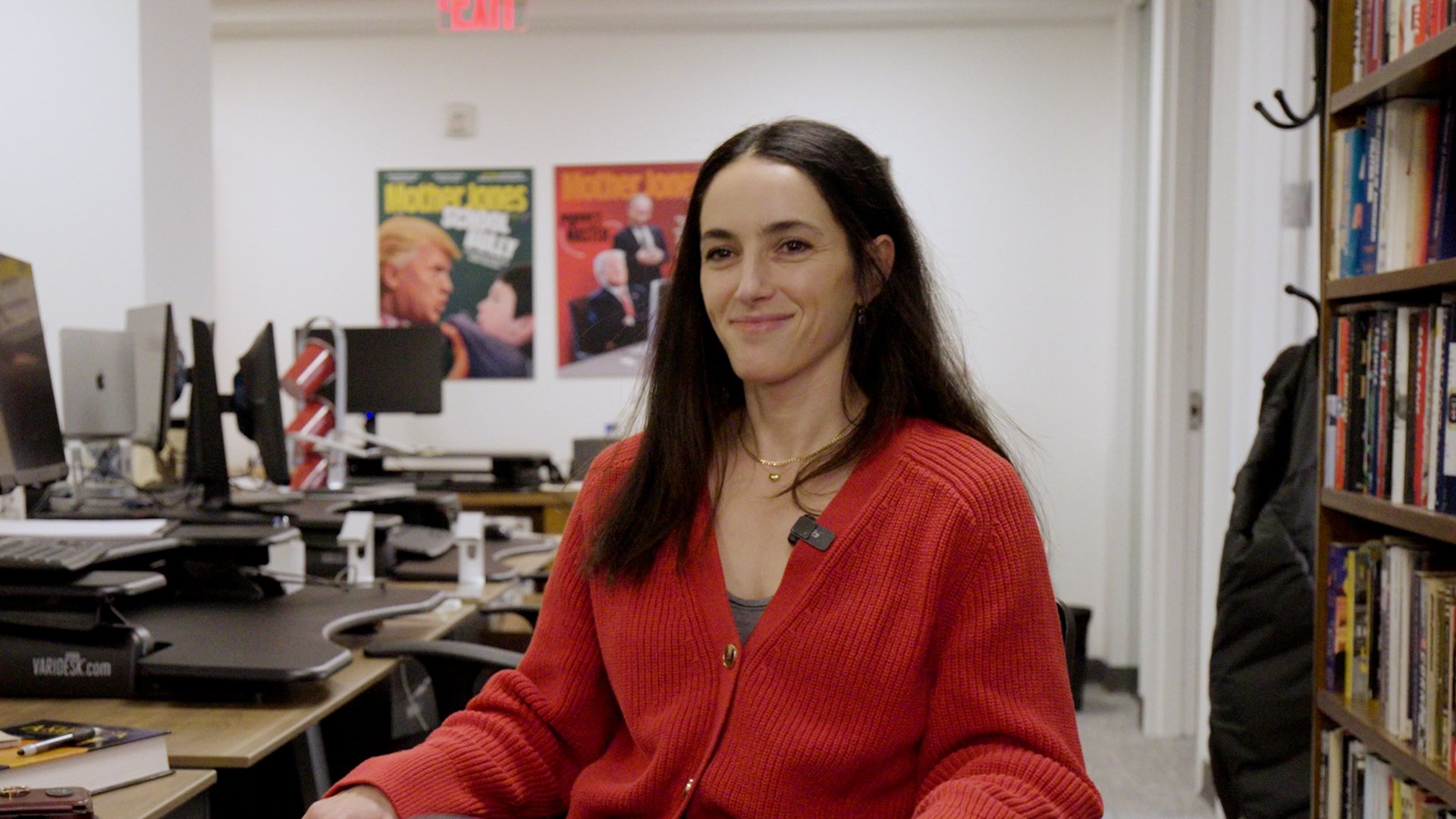
Pema Levy gave us the institutional observer's view. As a journalist who has covered the court for years, Pema sees the patterns and trajectories that individual cases don't reveal. Her analysis of how Republican judicial strategy shifted after 2000 - from appointing judges who were excellent and fair to appointing judges who would be reliably partisan - is the kind of structural insight that transforms a news story into something that helps an audience genuinely understand a system. It's also the kind of insight that a foreign audience particularly needs, because the politicization of the Supreme Court looks very different when you understand the deliberate strategy behind it rather than just its current symptoms.
And Kate gave us the human interior. The basketball court above the courtroom, nicknamed "the highest court in the land," where the sound of dribbling would float down to the justices mid-argument. The 60-hour weeks. The particular combination of terror and exhilaration of being taken seriously, at 27, on questions that would affect millions of people. Her guarded but genuine hope that the institution can recover what it has lost.
Three people. Three angles. One institution that Germany's audience knew almost nothing about, but needed to.
Every film we make for Galileo involves the same core challenge we've written about before in these pages: how do you take something that is deeply embedded in American legal, political, and cultural history, and render it intelligible and meaningful to a European audience watching on a Sunday night?
The Supreme Court is a particularly demanding version of this challenge, because the institution's authority rests on premises that Europeans often find genuinely puzzling. The idea that nine unelected judges, appointed for life, have the final word on the most consequential questions in American public life: abortion rights, campaign finance, racial equality, presidential power, whether a sitting president's tariffs are constitutional, is not self-evident to people who live in parliamentary democracies with constitutional courts that operate quite differently. Neither is the American reverence for a 230-year-old document as the supreme law of the land in a way that permits its nine current interpreters to, in effect, change the meaning of that document through their rulings. Pema put it more sharply than we could have in narration: "The central questions of our society should be decided by elected representatives. But what we're seeing now is more and more political questions landing at the Supreme Court, with judges who are not elected and who hold office for life."
That single observation, translated into a context a German viewer could recognize and feel the weight of, did more to explain the current moment in American democracy than any amount of background narration. It's why we spend so much time in pre-production finding people who can articulate what is actually at stake, not just what is happening on the surface.
Inside Supreme Court is an explainer in its Galileo format - twelve minutes, structured around three insider voices, designed to leave a general audience meaningfully better informed about a specific institution.
But making it required everything we bring to our longer documentary work: months of research and subject development, a clear editorial architecture, and the kind of on-camera relationship with subjects that produces genuine revelation rather than careful public statements.
Kate Shaw's account of the step aerobics class with Justice O'Connor, how she and her fellow clerks accidentally committed to attending every session for the rest of the year, is not the kind of detail that comes from a formal interview with a prepared subject. It comes from a conversation in which someone has relaxed enough to remember that the Supreme Court, for all its gravity, is also a place where human beings show up every day and live their professional lives.
Those moments are what make an institution real to an audience. They are also, frankly, what make the difference between a film that gets watched and one that gets switched off.
That's the standard we hold ourselves to whether we're making a twelve-minute explainer for a German broadcaster or a ninety-minute documentary for a streaming platform. Or, for that matter, a fundraising film for a nonprofit, a legacy documentary for a university, or a conference film for an organization that wants its story to live beyond the event itself.
The subject matter changes. The requirement, that a stranger watching for the first time finds a genuine reason to care, never does.
Inside Supreme Court aired on Galileo/ProSieben in early 2026, but you can watch it here on YouTube:
For almost 20 years of award winning production, Jynx Productions has specialized in presenting life as it unfolds to viewers across the globe. Our experienced production professionals are passionate about telling the kinds of authentic stories that leave a lasting impression on audiences. We’re glad to know that our work has sparked curiosity and joy, and has entertained millions of people.
If your organization has a complex story that needs to reach an audience that doesn't yet know you, we'd love to hear about it.