

The Market Knows Something
By Kathleen O’Heron · 5 min read
I write here when something is worth thinking through. New pieces from Focus and the Jynx Journal go directly to subscribers.
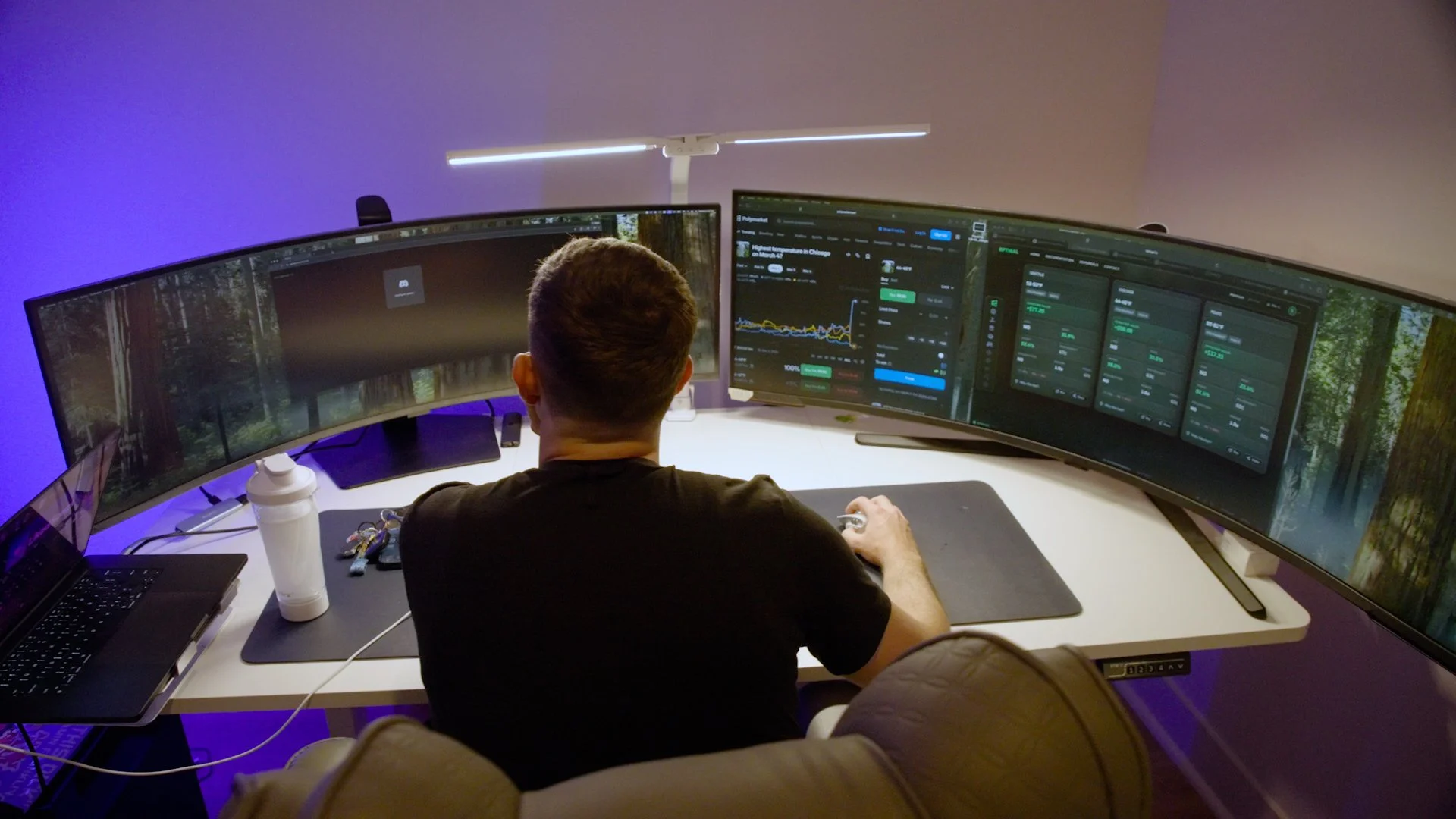
We just finished a short documentary about prediction markets. Specifically about Kalshi: the American fintech platform where you can bet real money on whether it will snow in New York tomorrow, whether Donald Trump will mention a specific word in his next speech, or whether the US will go to war. The betting is not what stayed with me.
What prediction markets actually are, underneath the hype, is a mechanism for aggregating what people believe will happen and pricing that belief in real time. For financial services institutions, NGOs, and anyone whose work depends on the relationship between information and credibility, that mechanism raises questions worth taking seriously.
The subject of our film, a 23-year-old in Florida who made more than $80,000 this year trading on these platforms, put it plainly. When we asked him how he knew to bet on a US strike against Iran in February, he said: I watched where the money was moving. In the middle of the night, large sums started flowing onto one side of the market. The probability of a strike jumped from 20% to over 70% in minutes.
He did not know what was happening. He knew that someone else did.
That is the part that matters. Prediction markets are, at their core, a bet on who knows more than everyone else. The platforms have constructed a legal fiction: they call what they sell 'shares in a probability,' not bets, which is clever, and which has given them regulatory cover in the US that traditional betting platforms do not have. The Trump administration has been openly supportive. Donald Trump Jr. is an advisor to both Kalshi and Polymarket. Truth Social is reportedly planning its own prediction portal.
The author we interviewed for the film, Danny Funt, who has covered these platforms for years, described their appeal with precision: they offer the promise of a fast path to wealth to people who feel economically trapped. If you're smart and you invest the time, the pitch goes, you can make real money.
The reality, as the data shows, is that fewer than 5% of prediction market users actually profit. The ones who do run custom AI tools that watch for large money movements, a proxy for insider information, and execute trades in seconds. Everyone else is paying for the privilege of betting against people who know more than they do.
This is, at its core, a story about the price of information. Information asymmetry is something every financial services institution thinks about constantly, even when they do not use that language. The question prediction markets raise for those institutions is not whether these platforms are good or bad. It is more fundamental: what happens to public trust when the gap between what insiders know and what everyone else knows becomes tradeable? When that gap is not merely exploited but systematized, packaged, and sold as a product?
We went to Florida to make a film about a young man who figured out how to get rich by following the smart money. We came back with a portrait of a market that treats information as the only asset that matters, and a case study in what happens when asymmetry becomes infrastructure.
For the organizations and institutions we work with, whose reputations depend on being trusted to hold information responsibly, that case study is not abstract. The same dynamic that makes prediction markets work is the dynamic that makes institutional credibility fragile. Understanding one helps you protect the other.